
Zed 1.27 teaches AI commit messages your repo's style and stops the agent panel eating memory on open
Go 1.27 generic method highlighting, an option to open README files by default, AI commit messages that follow your repo's style, and lazy parsing in the agent panel.
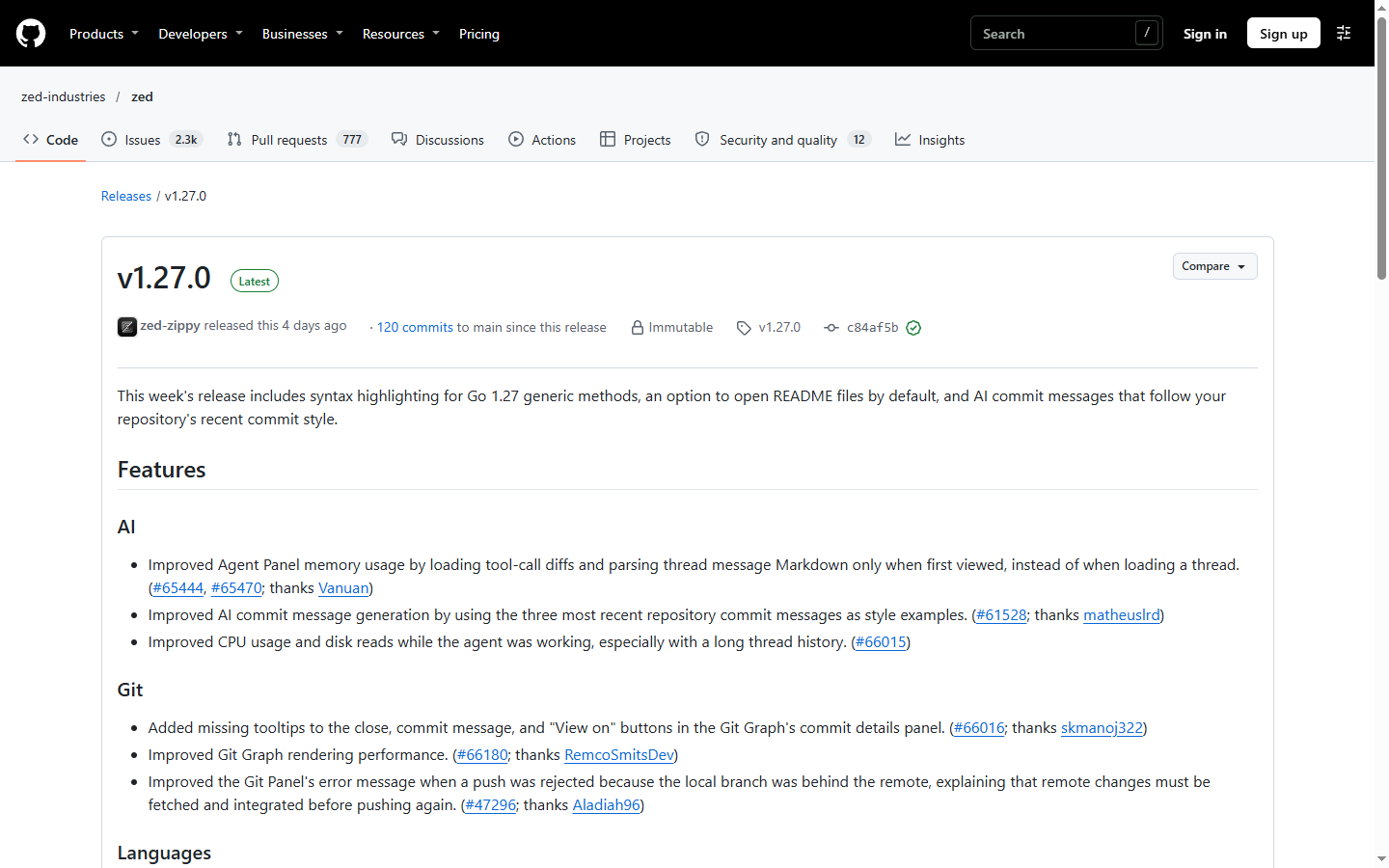
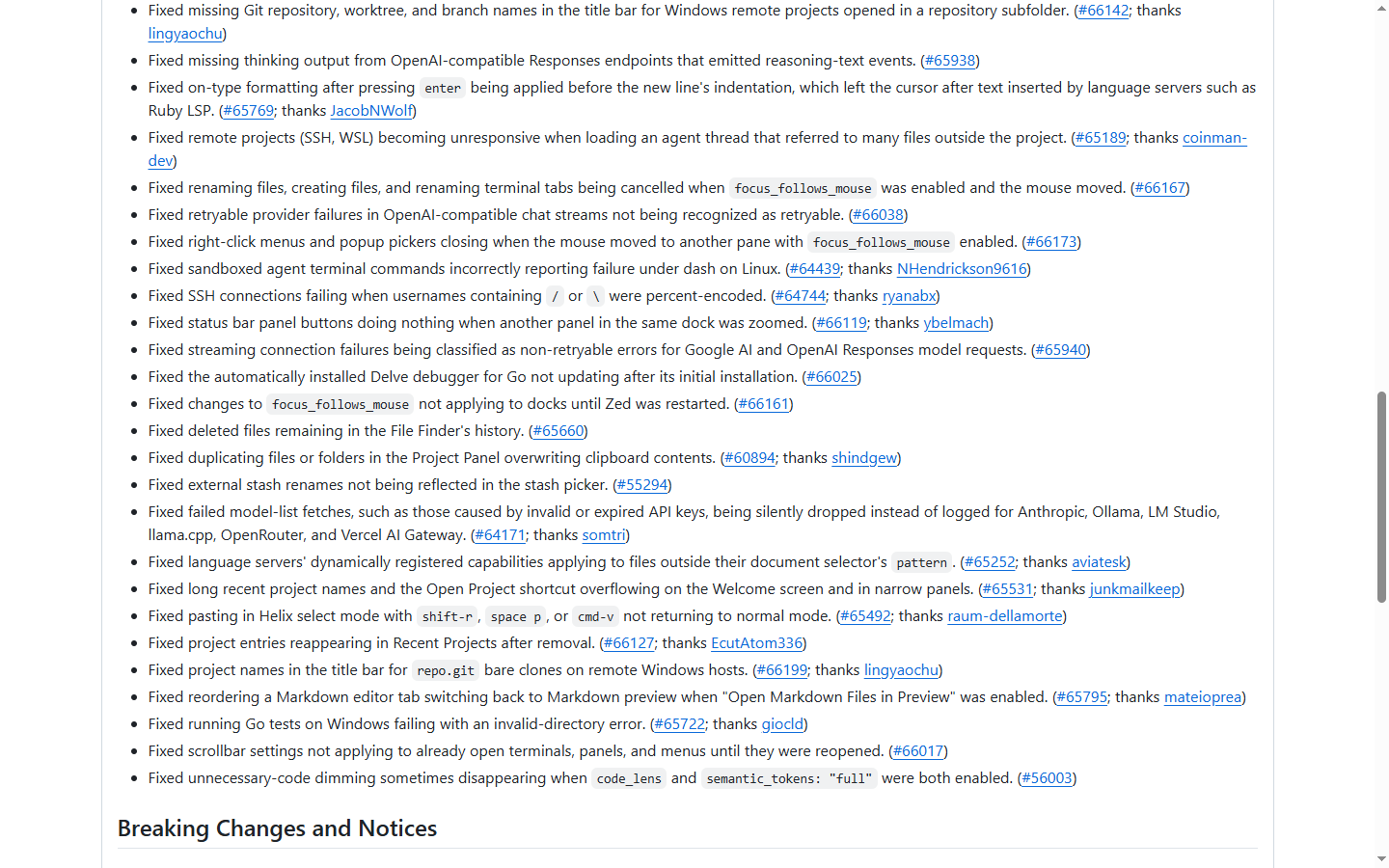
Zed shipped 1.27.0 on November 4. Its release notes read like prose in a changelog: short sentences, specifics, no marketing. What caught my attention this time was not a feature but a performance entry.
What “parse it when you look” is worth
The entry says the agent panel now loads tool-call diffs and parses thread message Markdown only when first viewed, instead of doing all of it when the thread loads.
That sentence encodes a very typical editor trade-off. An agent session accumulates hundreds of messages and dozens of diffs. Parsing everything into rich text on open gives you a complete history that is slow to touch. What people actually look at, 99% of the time, is the last two or three items.
My experience with changes like this is that the win is not in any benchmark. It is that the hesitation disappears. Opening a long session used to cost a pause, and the pause taught you to avoid opening it. Without the pause, you actually go back and reread how you solved that bug last week.
AI commit messages learn your repository
The second change is a pleasure: AI-generated commit messages now follow the style of your repository’s recent commits.
This is underrated. Most AI commit tools produce textbook conventional commits, feat(scope): ... and all. But if your repository has always used one-line Chinese sentences that say what happened, a sudden conventional commit looks like it was written by a stranger.
Making the tool adapt to the repository, instead of the other way around, is a direction I like.
The rest
- Syntax highlighting for Go 1.27 generic methods: since generics landed in methods, plenty of editors color them like ordinary methods
- Optional “open README by default”: no more empty editor when you enter a directory
- A batch of small stability fixes across panels, collaboration and the terminal
A note on the new competition
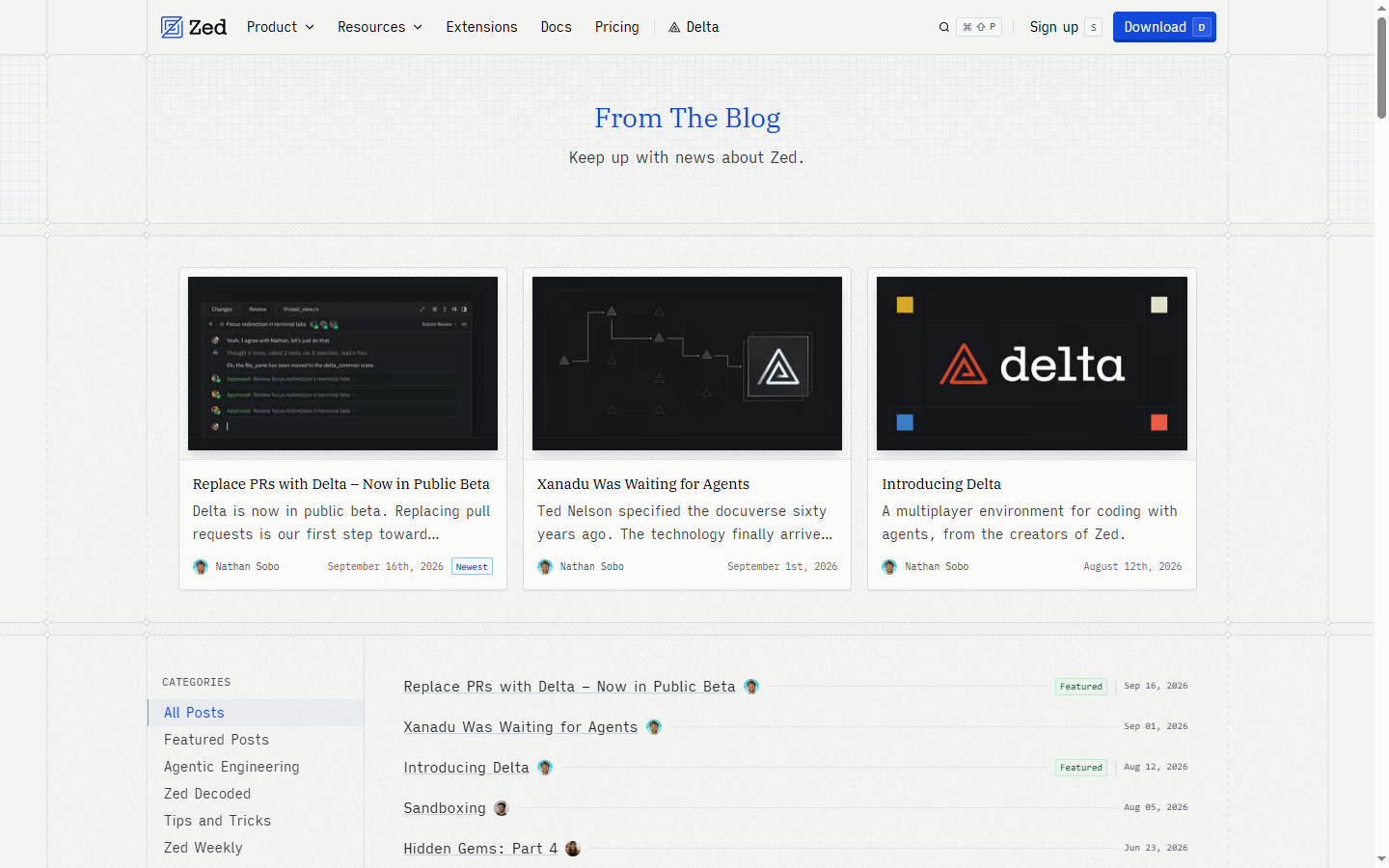
Three years ago editors competed on startup time and memory. Now they compete on the cost of managing agent sessions. Both of this release’s themes, lazy parsing and learning repo style, come from that shift: as AI runs longer inside your editor, the editor becomes responsible for history and for consistency.
I am not a heavy Zed user, but every release note leaves me with the same impression: this team takes seriously the question of what annoys someone who sits in it for ten hours a day. That convinces me more than any benchmark.
Comments
…