
Node.js ships security releases on November 11: HIGH on all three lines, and no CVE IDs yet
The project pre-announced HIGH-severity fixes for 26.x, 24.x and 22.x on Wednesday, November 11. No details, no identifiers. That is exactly when ops work pays off.
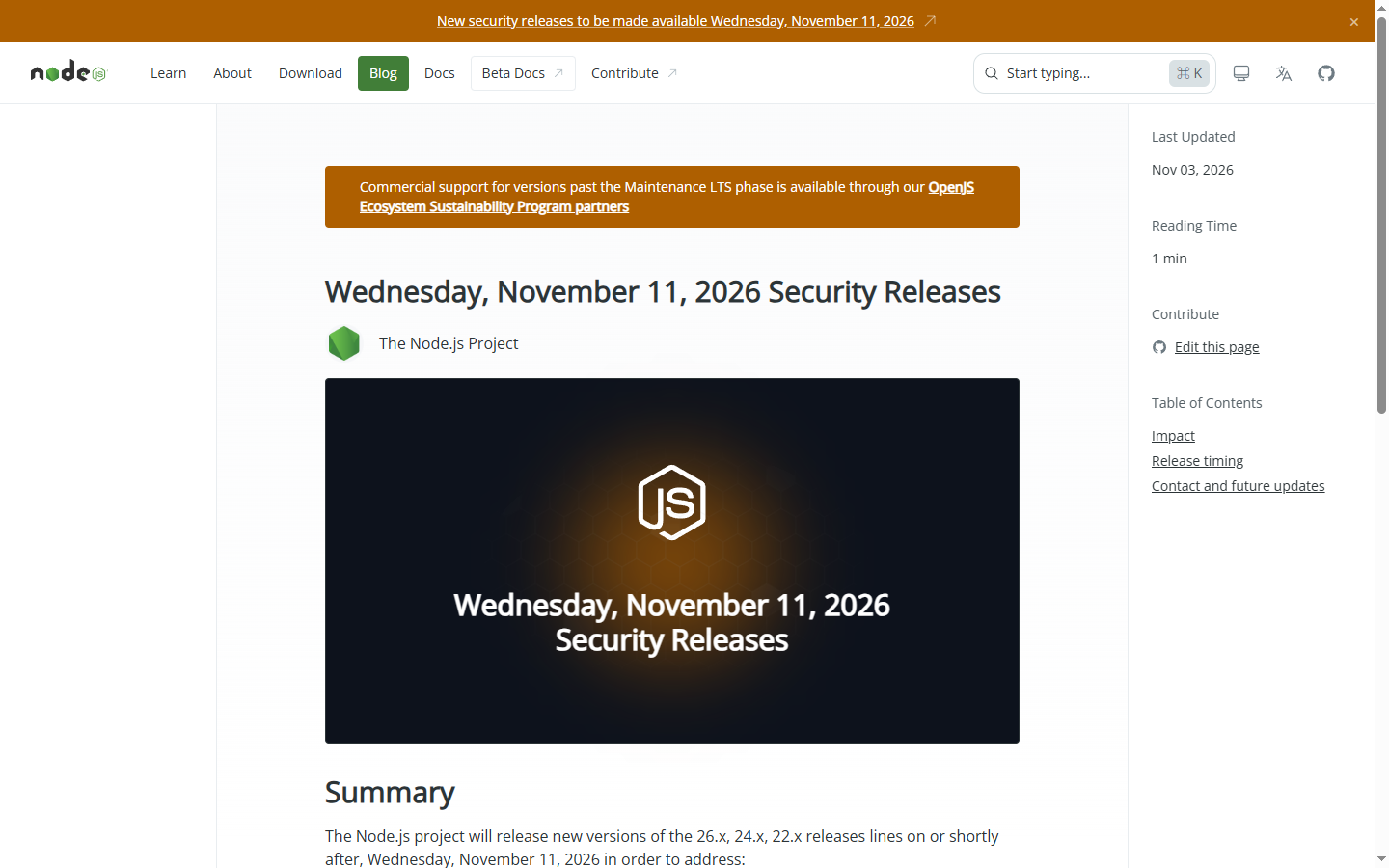
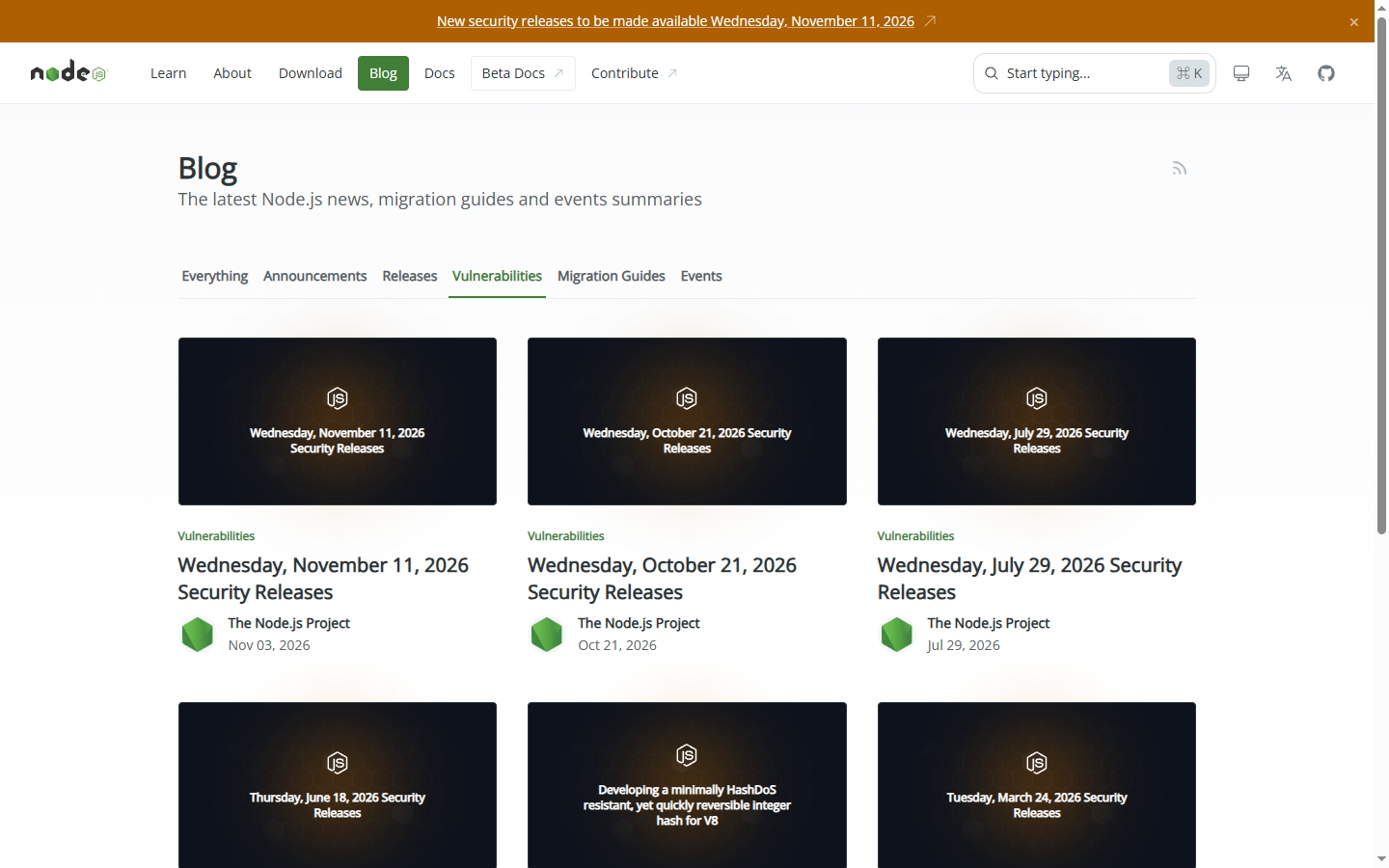
Node.js publishes a pre-announcement before security releases. It contains severity, affected lines and a date, and deliberately nothing else. November’s version says this: on Wednesday, November 11, releases land for 26.x, 24.x and 22.x, with HIGH as the highest severity on all three.
It is the 8th today. You have three days.
What “HIGH on all three lines” tells you
Usually one line is HIGH and the older ones are moderate, because most of the old code has already been fixed once. All three lines at HIGH points at code they share: HTTP parsing, TLS, or one of the built-in modules everyone still depends on.
I am not going to guess which module, because guessing without details only moves your attention to the wrong place. The one thing worth remembering: this class of issue usually needs no application code to exploit. A Node service reachable from the internet is the whole precondition.
Why the pre-announcement matters more than the advisory
When the advisory drops, attackers get the same information you do. The pre-announcement buys you three days, and three days is enough to do real work:
- Inventory Node versions on every machine (I once found a box documented as 22 that was running 18)
- Dry-run the upgrade and confirm no native modules need rebuilding
- Decide which services can restart immediately and which need a window
- Upgrade a staging box first, so “a dependency broke” happens in daylight
The point is not beating an attacker to a patch. It is turning an emergency into a planned change. The same patch applied calmly at 3pm on Wednesday carries an order of magnitude less risk than the one applied at 3am in a panic.
My three-day checklist
- Inventory. Run
node -von every machine and put it in a table. Trust the binary, not the documentation. - Rehearse. Upgrade a staging host and watch for native modules (
node-gypterritory). If one breaks, fix its toolchain now, not during the incident. - Book the window. Reserve Wednesday evening. If you do not need it, fine. If you do, you are not asking anyone for permission.
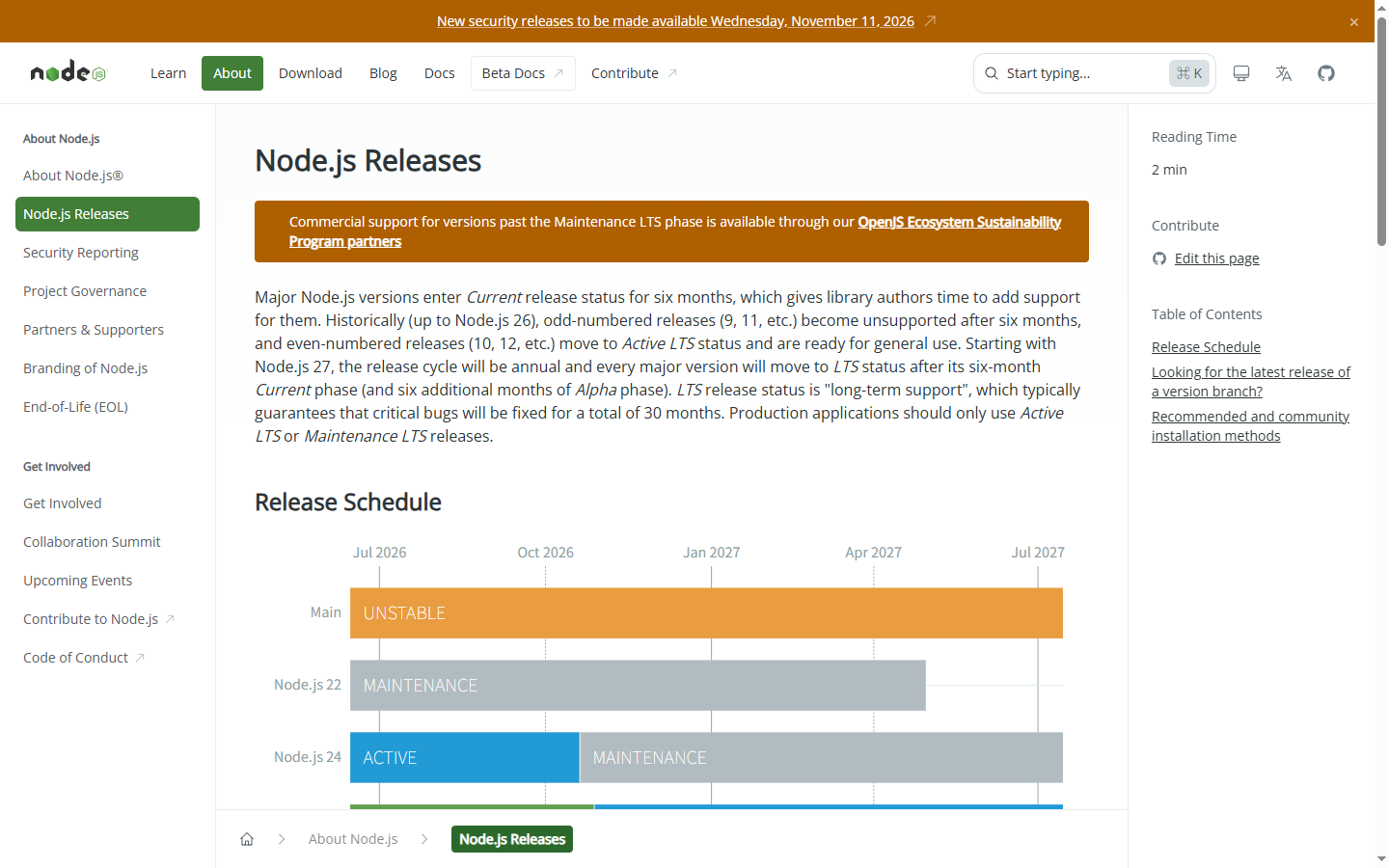
- Do not forget EOL. The project says it plainly: EOL versions are always affected and never patched. That is the machine that actually needs touching this week.
If you are still deciding which line to run: 26.x just became LTS (I wrote about that) and 24.x is on 24.22.2. Both are supported. Pick the one you can maintain for three years.
One caveat
The announcement says “on or shortly after” Wednesday. Do not pin your window to late Wednesday night; keep a day of slack. I once read “on or shortly after” as “on time” and spent a whole night waiting for nothing.
Comments
…