
Ollama 0.40.15 brings a 9B coding model from Xiaomi, plus AutoTrust decision models that only answer yes, no, or a score
mimo-v2.6 is a 9B model aimed at code and agent workflows, one command away. The same release adds AutoTrust decision models that return choices and probabilities.
Ollama shipped 0.40.15 on November 6. The project’s rhythm has become interesting: it is less a shell for running models locally and more a place where the parts a local stack needs keep arriving. This release adds two of them, one for writing code and one for making judgments.
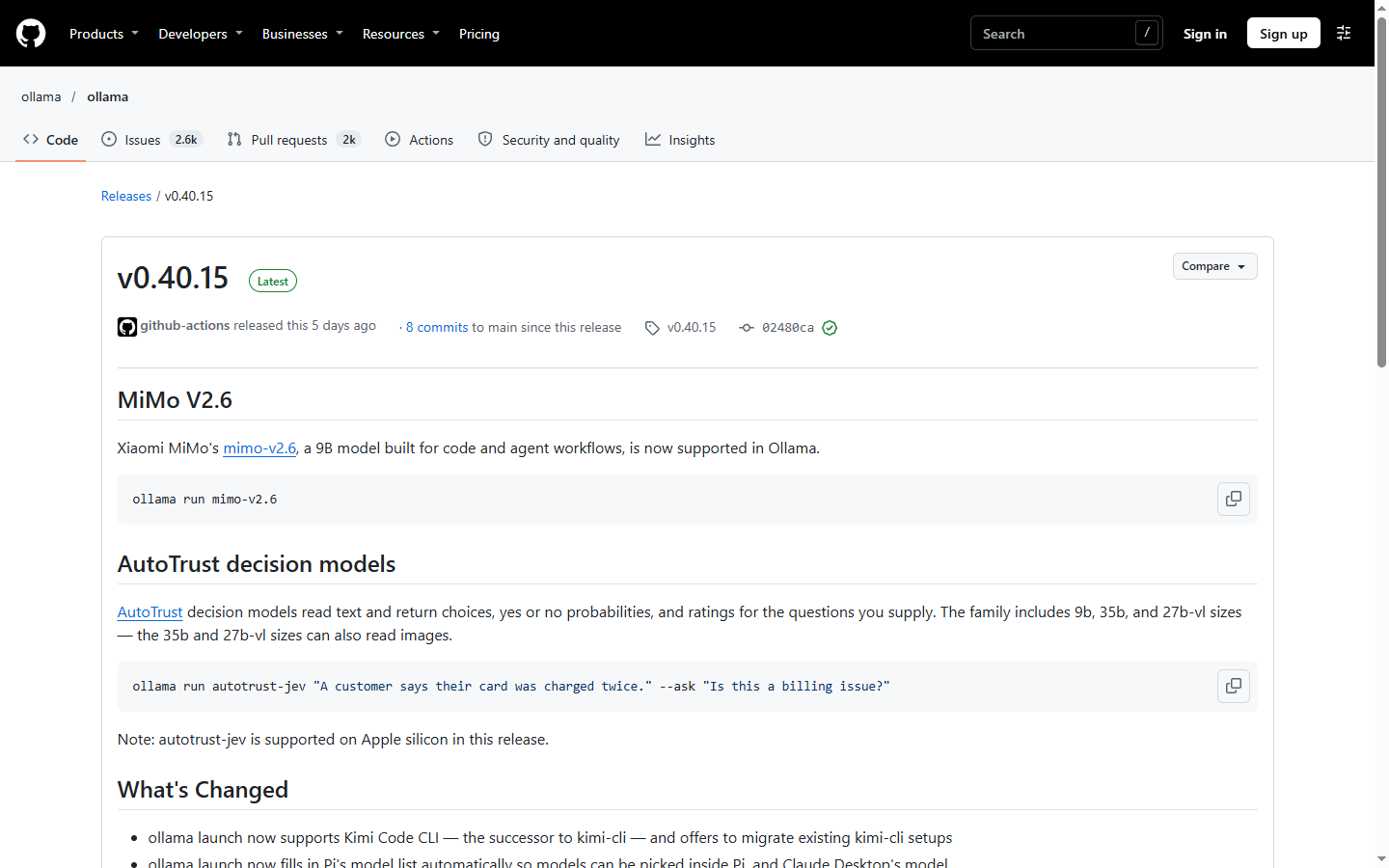
mimo-v2.6: 9B, tuned for code and agent loops
ollama run mimo-v2.6 pulls it. It is Xiaomi MiMo’s model, full name MiMo-V2.6-Distill-Qwen-9B: 9B parameters, 256K context, about 6.6GB of download.
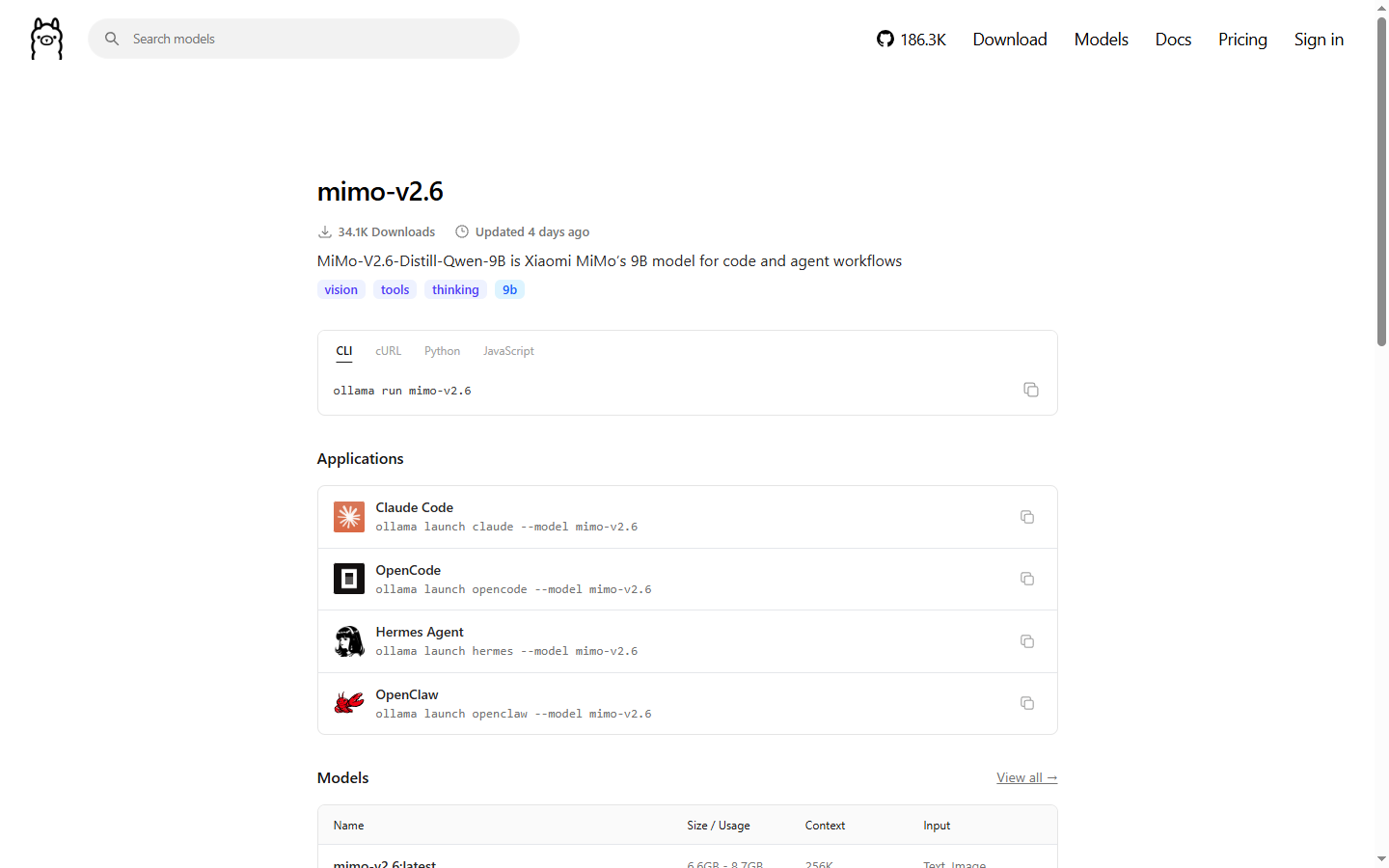
The page lists clients it is meant for: Claude Code, OpenCode, Hermes Agent, OpenClaw. All of them are situations where a model runs hundreds of small tool-calling turns. That framing matters more than the parameter count: it targets the many small requests inside an agent loop, not one long generation.
In practice 9B sits in a useful spot, between “runs on a 16GB machine” and “not too stupid to emit valid JSON”. For real agent work, a local 9B with a cloud model as fallback beats both all-cloud (cost) and all-local (reliability).
AutoTrust: another round of decision models
The second addition is AutoTrust, described briefly: it reads text and returns choices, yes/no probabilities, or ratings for the question you supply.
ollama run autotrust-jev "A customer says their card was charged twice." --ask "Is this a billing issue?"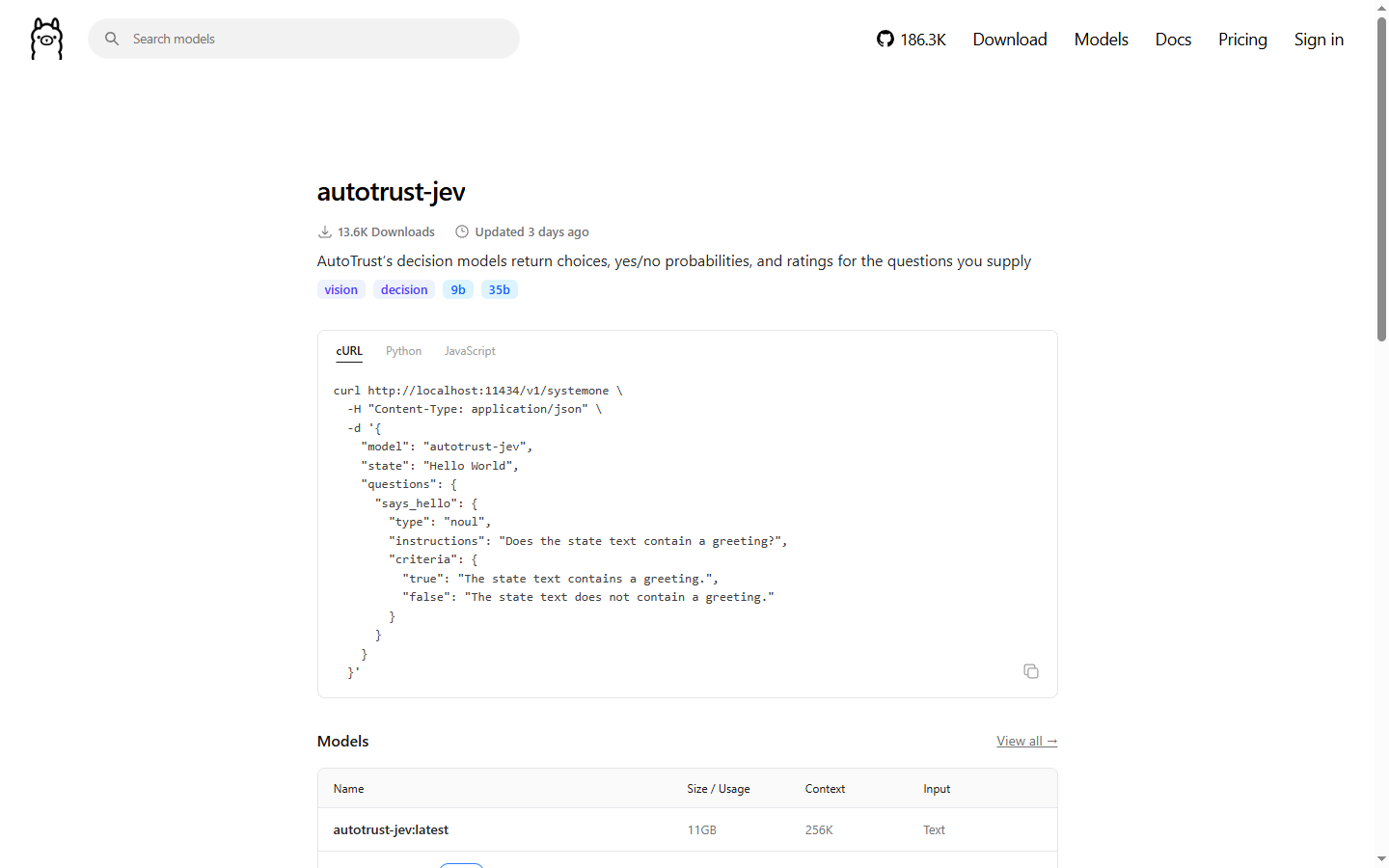
The family ships 9b, 35b and 27b-vl sizes; the latter two can read images. The d3 models in 0.40.11 went the same way, and now AutoTrust joins them, which suggests vendors treat “small models that classify” as a category of its own.
My take is simple: these models earn their keep through stability, not intelligence. A ticket router that is right 93% of the time with the same reasoning every run is more useful than one that is right 96% with a different story each time, because you can write regression tests, tune thresholds and roll it out gradually. You cannot unit test a model that answers by mood.
The smaller fixes that matter day to day
ollama launchnow supports Kimi Code CLI and offers to migrate an existing kimi-cli setup- Claude Desktop’s model picker finally shows real Ollama model names instead of internal identifiers
- Recurrent and vision GGUF models can serve more than one request at a time; these used to serialize
- Long-context (YaRN) scaling is fixed for Qwen3 and Qwen3.5
- Running
ollamawith no arguments opens the welcome launcher
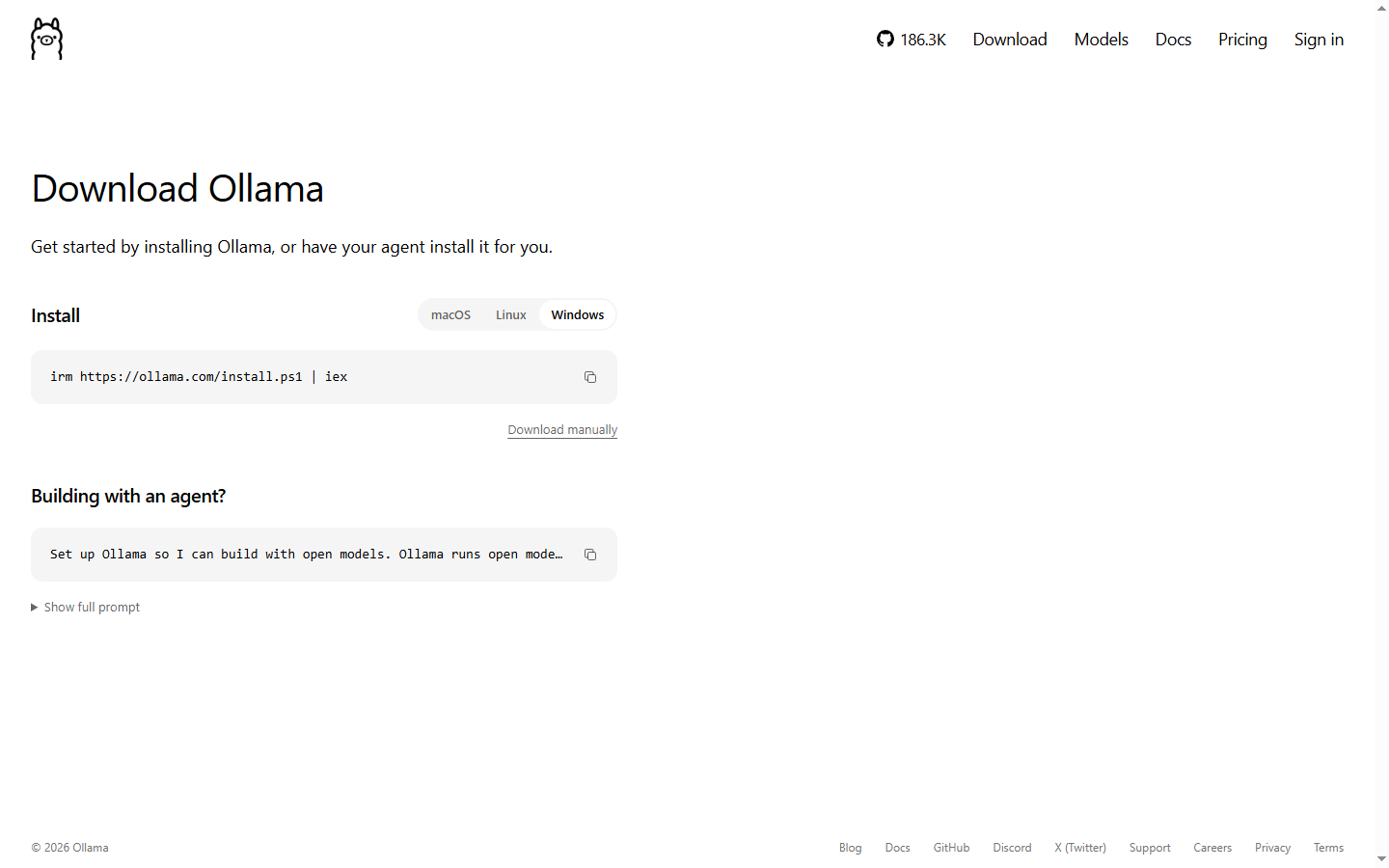
How I would use the two
| Job | Tool | Why |
|---|---|---|
| Small edits, test scaffolding | mimo-v2.6 | 9B is fast enough to run on a laptop |
| “Should CI block this?” | a decision model | Boolean output, testable |
| Long document summarization | a large cloud model | a local 9B drops detail |
The real change in local inference over the last two years is not that models got smarter. It is that they got divided up. A pipeline with a small router, a large generator and a decision model is standard practice in the cloud, while locally we had “one big model and a chat” until recently. Releases like 0.40.15 are the missing parts arriving one at a time.
Comments
…